
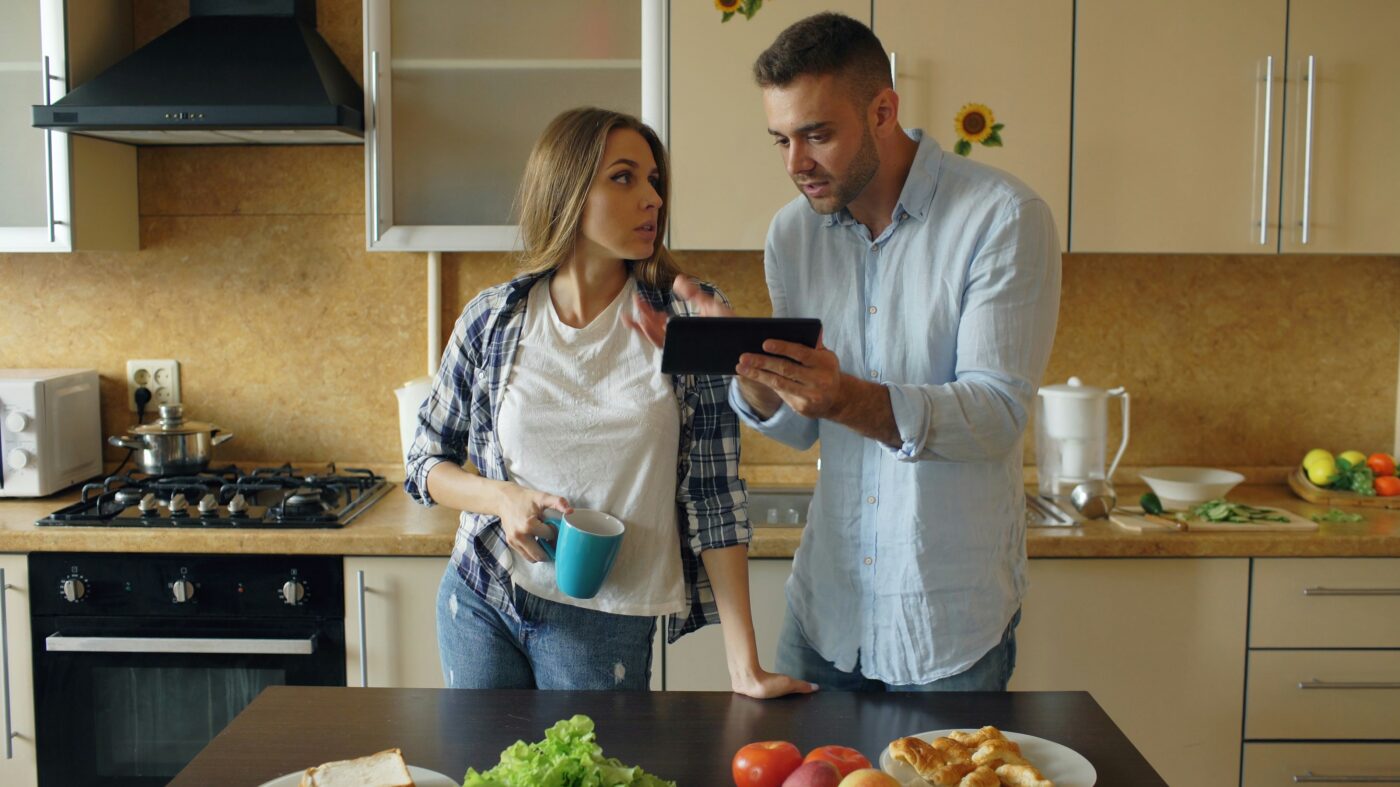
Why Couples Start Feeling Like Roommates Instead of Partners
Many couples do not lose connection all at once.
It often happens slowly.
At first, life gets busy. Work, parenting, stress, routines, finances, family responsibilities, and daily tasks take up more space. Conversations become more practical. Time together becomes more limited. Affection may happen less often. Emotional check-ins may get pushed aside.
Over time, you may start to feel less like romantic partners and more like two people managing a household, schedule, or family together.
You may still care about each other. You may still love each other. But the relationship may feel quieter, more distant, or more functional than connected.
If you feel like roommates instead of partners, it does not always mean the relationship is over. It may mean the relationship needs attention, repair, and a different way of reconnecting.
Why Couples Start Feeling Like Roommates
Many couples drift into roommate mode because daily life becomes centered around tasks instead of connection.
You may talk about:
- schedules
- bills
- chores
- kids
- errands
- work stress
- appointments
- what needs to get done next
These conversations are important, but when they become the main form of communication, the relationship can start to feel emotionally flat.
The couple may still function well in practical ways, but the emotional bond begins to feel weaker.
Roommate mode can happen when couples stop making space for curiosity, affection, playfulness, vulnerability, or meaningful conversation.
It is not usually because one person suddenly stops caring. More often, connection fades because stress and routine slowly take over.
Signs You May Feel More Like Roommates Than Partners
Feeling like roommates can look different for every couple.
Common signs include:
- most conversations are about logistics
- affection has decreased
- sex or physical intimacy feels rare or disconnected
- you spend more time on phones or separate activities
- one or both partners feel lonely in the relationship
- emotional conversations feel awkward or avoided
- date nights or quality time rarely happen
- you feel like co-parents or housemates more than partners
- resentment has built up quietly
- you miss how the relationship used to feel
Sometimes the relationship does not feel actively bad. It may just feel distant, routine, or emotionally disconnected.
That can be confusing because there may not be one major conflict to point to. Instead, the disconnection may feel like something that slowly grew over time.
Emotional Distance Can Build Quietly
Emotional distance often develops when partners stop sharing their inner world with each other.
This may include thoughts, worries, hopes, frustrations, fears, needs, or small moments from the day.
At the beginning of a relationship, couples often naturally share more. They ask questions. They make time. They are curious about each other. They notice small details.
As life becomes busier, couples may shift into autopilot.
One partner may think, “They already know how I feel.”
The other may think, “There is no point bringing it up.”
Both may assume the distance is just part of life.
But relationships need ongoing emotional contact to feel alive.
Without that contact, partners may begin to feel unseen, unimportant, or alone, even if they are physically together every day.
This is one reason couples therapy can be helpful. Therapy creates space to slow down and understand what has been missing emotionally, not just what is happening practically.
Related Article: When Connection Fades: Couples Counseling in Arcadia
Stress Can Change How Partners Relate to Each Other
Stress plays a major role in relationship disconnection.
When one or both partners are stressed, overwhelmed, or emotionally exhausted, they may have less energy for warmth, patience, affection, or meaningful conversation.
When the nervous system is focused on managing stress, it can become harder to access warmth, curiosity, affection, and emotional presence.
Stress can make people:
- withdraw
- become irritable
- avoid difficult conversations
- spend more time distracted
- feel less interested in intimacy
- focus mostly on responsibilities
- become more reactive or defensive
This does not mean love is gone. It may mean the nervous system is overloaded.
At Aspire Counseling Group, we often look at relationship concerns through a trauma-informed therapy and nervous system lens. When stress keeps the body in survival mode, connection can feel harder. Partners may become focused on getting through the day rather than turning toward each other.
Understanding this can reduce blame. Instead of assuming, “You do not care,” couples can begin asking, “What has been getting in the way of connection?”
Related Article: Why Your Nervous System Won’t Calm Down, Why You Feel Emotionally Exhausted All the Time
Why Intimacy May Start to Fade
Intimacy is not only physical. It is also emotional.
When emotional closeness decreases, physical intimacy often changes too. Some couples stop being affectionate. Others continue having sex, but it feels less connected. Some avoid talking about intimacy altogether because it feels uncomfortable, painful, or loaded.
Intimacy may fade because of:
- stress
- resentment
- unresolved conflict
- parenting demands
- body image concerns
- depression or anxiety
- lack of emotional safety
- feeling unappreciated
- fear of rejection
- routine and exhaustion
Many couples feel embarrassed or discouraged when intimacy changes. But shifts in intimacy are common, especially when emotional distance has been building for a while.
In relationship counseling, couples can begin to talk about closeness, affection, and intimacy in a safer and more supported way.
Small Disconnections Can Become Bigger Over Time
Many couples do not realize how much small disconnections matter.
A missed bid for attention.
A distracted response.
A lack of affection.
A conversation that gets brushed aside.
A repeated feeling of being unimportant.
One moment may not feel like a big deal. But over time, these moments can add up.
One partner may stop reaching out because they expect to be dismissed. The other may not realize anything has changed until the relationship feels distant.
This is how couples can end up living parallel lives.
They may share a home, routines, responsibilities, and history, but feel emotionally separate.
The good news is that emotional distance can often be repaired when both partners are willing to notice the pattern and begin turning toward each other again.
Related Article: Why Small Arguments Turn Into Big Fights in Relationships
Why Roommate Mode Can Feel Lonely
Feeling alone in a relationship can be especially painful.
You may wonder:
“Why do I feel lonely when we are together?”
“Why do we only talk about tasks?”
“Do they still want to be close to me?”
“Are we just going through the motions?”
“Can we get back what we had?”
This kind of loneliness can feel confusing because the relationship may still look stable from the outside.
You may still be parenting together, attending family events, managing responsibilities, or showing up as a couple. But emotionally, something may feel missing.
Therapy can help couples talk about this distance without immediately turning it into blame, criticism, or defensiveness.
Reconnection Usually Starts Small
Many couples believe they need a major breakthrough to reconnect.
But reconnection often starts with small, consistent changes.
This may include:
- checking in without distractions
- asking more thoughtful questions
- showing appreciation
- making time for affection
- repairing after tense moments
- setting aside time that is not about logistics
- being honest about loneliness or disconnection
- rebuilding trust through follow-through
- learning to listen without immediately defending
The goal is not to recreate the exact relationship you had at the beginning.
The goal is to build a relationship that feels connected, emotionally safe, and realistic for the life you are living now.
How Couples Therapy Can Help
Couples counseling can help partners understand how they became disconnected and what needs to change for closeness to return.
Therapy can help couples:
- identify patterns of emotional distance
- improve communication
- talk about resentment or loneliness
- rebuild emotional safety
- understand stress and nervous system responses
- reduce defensiveness and withdrawal
- reconnect through small, meaningful changes
- rebuild affection and intimacy
- clarify what each partner needs to feel close again
Couples therapy is not about blaming one person. It is about understanding the cycle that has developed and helping both partners find new ways to relate.
When couples feel like roommates, therapy can help them move from managing life side by side to feeling more emotionally connected again.
When to Consider Couples Counseling
Couples counseling may be helpful if you feel disconnected, lonely, or emotionally distant in your relationship.
You may benefit from support if:
- you feel more like roommates than partners
- conversations are mostly about logistics
- affection or intimacy has decreased
- you feel lonely even when you are together
- resentment is building
- emotional conversations are avoided
- you miss feeling close
- stress has taken over the relationship
- you want to reconnect but do not know how
You do not need to wait until the relationship feels like it is in crisis. In many cases, therapy is most helpful before distance becomes deeper or resentment becomes harder to repair.
Couples Counseling in Arcadia, CA
Aspire Counseling Group provides couples counseling in Arcadia, CA for partners who want to improve communication, rebuild connection, and feel more emotionally close.
Our therapists help couples better understand the patterns that create distance so they can reconnect with more clarity, compassion, and emotional safety.
We offer in-person therapy in Arcadia, serving couples from Pasadena, San Marino, Monrovia, Sierra Madre, and surrounding San Gabriel Valley communities, as well as telehealth therapy throughout California.
To get started, call or text (626) 639-8844 or schedule an appointment online.
Frequently Asked Questions About Feeling Like Roommates Instead of Partners
Q: Why do we feel like roommates instead of partners?
A: Couples often start feeling like roommates when stress, routines, parenting, work, or unresolved emotions take over the relationship. Conversations may become mostly logistical, while affection, intimacy, and emotional connection decrease over time.
Q: Does feeling like roommates mean the relationship is over?
A: Not necessarily. Feeling like roommates often means the relationship needs more attention, emotional connection, and repair. Many couples can rebuild closeness when both partners are willing to understand the pattern and make changes.
Q: Can couples therapy help us reconnect?
A: Yes. Couples therapy can help partners identify what created the emotional distance, improve communication, rebuild trust, and create small but meaningful ways to reconnect.
Q: What if one partner wants more closeness and the other seems withdrawn?
A: This is common. One partner may seek connection while the other withdraws because they feel overwhelmed, unsure, or afraid of conflict. Therapy can help both partners understand this cycle and respond differently.
Q: When should we start couples counseling?
A: Couples counseling can be helpful when emotional distance is growing, intimacy has decreased, conversations feel mostly practical, or one or both partners feel lonely in the relationship. You do not have to wait until things feel severe.
By Ani Martikyan, LMFT
Licensed Marriage and Family Therapist
Aspire Counseling Group
Last updated: August 2026